How to unpack after a rainy trip without spreading damp belongings
· Editorial team newswithlauraseattle.com
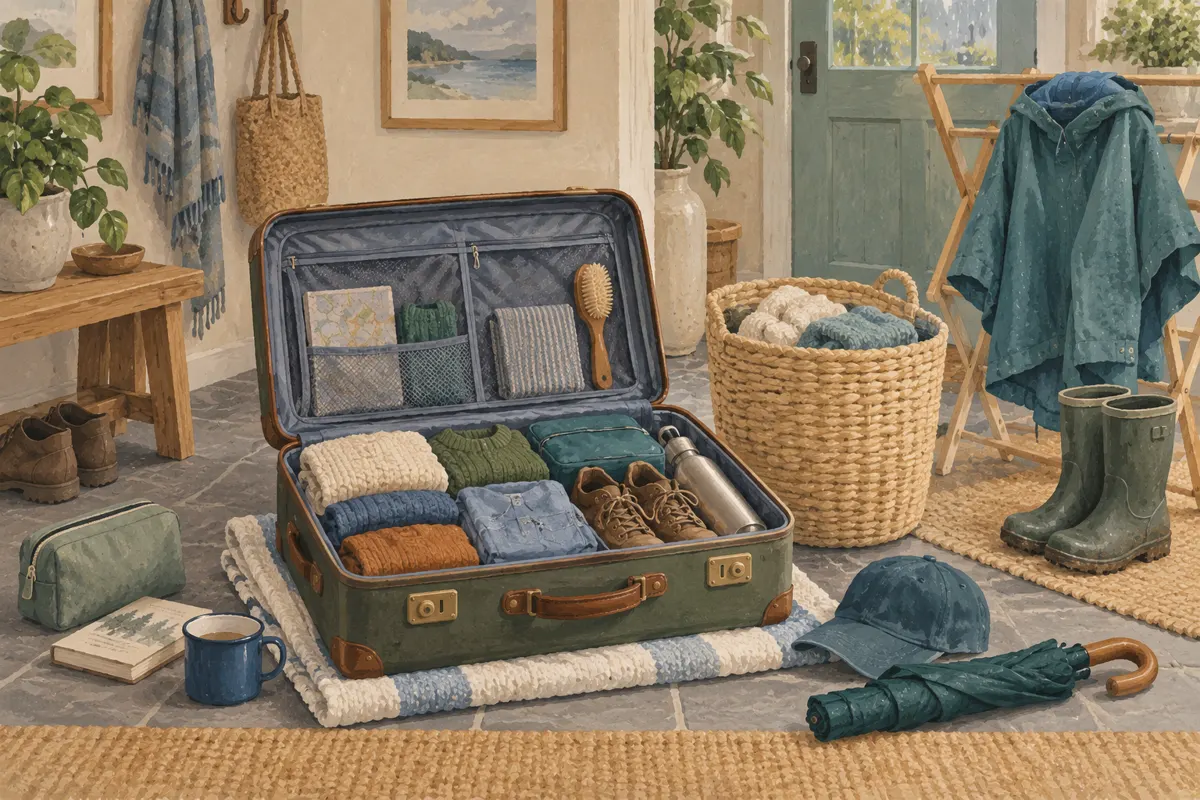
Unpack wet luggage in one easy-to-clean area, move dry belongings out first, and separate washable clothes from items that need air-drying. Empty the suitcase completely and leave it open until the lining, pockets, and straps are dry before storing it.
Set up one temporary unpacking area
Our proposed routine starts with a single landing spot near the entrance or laundry area. Choose a washable floor with enough room to open the suitcase and sort its contents. Keep the case off beds, upholstered furniture, and rugs so you do not create several damp spots to deal with later.
- Place a towel beneath the suitcase to catch drips, and replace it if it becomes wet.
- Set out a clean basket for dry belongings and a separate washable container for wet laundry.
- Make space on a drying rack for clothes and accessories that cannot go straight into the wash.
- Keep a soft cloth nearby for wiping the case and any wet surfaces.
If space is tight, use the same spot for sorting and drying in stages. Move each sorted group to its destination before opening the next packing cube. The aim is to keep the work contained without leaving damp items piled together.
Sort by condition before putting anything away
Do not assume everything inside stayed dry because the outside looks only slightly wet. Open packing cubes, laundry bags, and side pockets. Check the belongings themselves, especially anything packed beside a wet jacket, umbrella, or pair of shoes.
- Remove dry, clean belongings first. Put them in the clean basket, then return them to their usual places.
- Separate washable clothes. Take wet laundry to the washing area and follow each garment’s care label.
- Spread out damp items that need air-drying. Unfold them and give each one space instead of stacking them.
- Empty every remaining compartment, including toiletry pockets and shoe bags, before starting on the suitcase.
Treat a damp packing cube as another item to dry, even if its contents are fine. Leave it unzipped and empty. Keep anything still damp out of drawers and closets until you have checked it again.
Give wet clothes and accessories room to dry
For washable clothing, use the care label to decide the washing and drying method. If you cannot start a load immediately, our proposed holding step is to spread the wet pieces on a rack rather than leave them bundled inside the travel laundry bag.
- Unfold rain jackets and open their pockets; follow the care instructions for coated or waterproof fabrics.
- Open umbrellas in a place where drips can be contained and where they will not block a walkway.
- Open shoe fastenings and follow the footwear maker’s drying guidance.
- Empty reusable bags and pouches, leaving their openings spread apart.
Check the towel underneath these items as well. A wet towel belongs in the laundry routine, not beneath belongings you are trying to finish drying.
Clean the empty suitcase without soaking it
Check the luggage maker’s care instructions before choosing a cleaner, particularly for leather trim or specialty fabrics. For compatible hard-shell surfaces, use a soft cloth with mild soapy water, remove the soap with a clean damp cloth, and wipe dry. Avoid rough pads and aggressive scrubbing.
Remove loose debris from the interior, including pockets and seams; vacuum dry debris where appropriate. Spot-clean marks with a lightly damp cloth rather than saturating the lining. Wipe dirt from wheels and handles too, using a product suitable for their materials.
Check hidden damp spots before storage
Leave the empty suitcase open in a well-ventilated area and air-dry it without applied heat. Open internal dividers and pockets so you can inspect them. There is no single drying time for every case: check the actual condition before closing it.
As a final check, feel around seams, pocket corners, straps, and the underside of dividers. If a spot still feels damp, leave the case open longer. Once everything is clean and completely dry, close it and store it in a dry place. Nest smaller cases inside larger ones only when both are dry, then clear and wipe the unpacking area.