Keep wet weather gear from taking over your garage
· Editorial team newswithlauraseattle.com
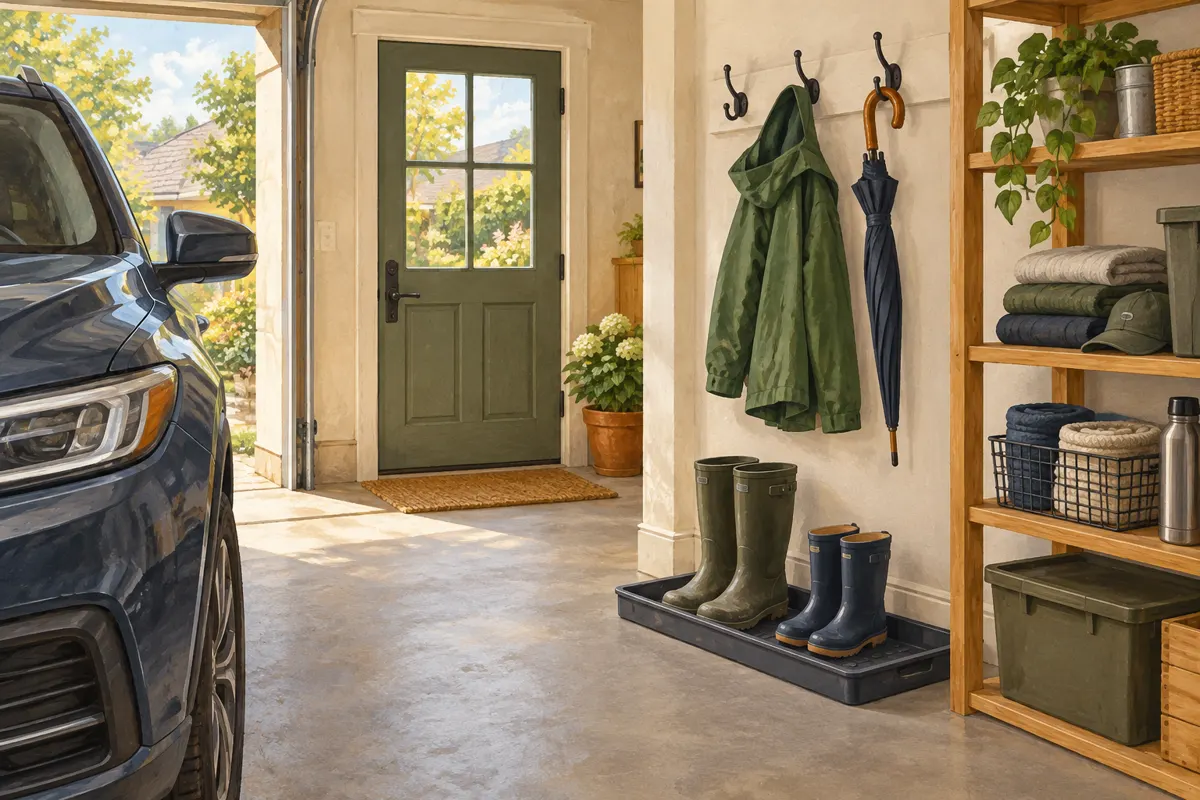
Give wet gear one landing spot beside the route from your car to the house: a tray for dripping footwear, hooks above it and a separate place for fully dry items. Unload wet bags when you arrive, open them and let their contents dry before packing them away. The layout below is an editorial proposal you can adapt to your garage.
Choose a landing spot that keeps the walkway clear
Start with the trip you make while carrying groceries, a work bag or a child’s backpack. Your proposed wet area should be easy to reach from that route without becoming part of the walking space. A short stretch of wall near the house entrance may work, provided hanging coats and open umbrellas do not project into the doorway or beside the car.
Before buying storage, use an existing tray or a piece of cardboard to mark its footprint. Park as usual, open the car doors and walk to the house carrying something bulky. If you have to step around the marked area, choose a shallower arrangement or another location. Remove the cardboard before placing wet items there.
- The house door opens fully without hitting boots or hanging gear.
- Car doors can open without contacting the storage area.
- The tray stays outside the walking route.
- Everyday hooks are reachable by the people using them.
- Wet items are separated from paper, cardboard and spare clothing.
- The floor and tray remain accessible for wiping.
Catch drips in a small, easy-to-clean area
For this proposed setup, put a waterproof tray with raised edges under the wettest items. Give boots a standing place and position umbrella hooks so runoff falls into the tray. Choose a tray you can lift and empty comfortably; a large container becomes awkward if it collects water and mud.
The useful principle is containment: a waterproof barrier catches runoff before it reaches absorbent materials. A tote used to carry wet sports gear home can serve as a temporary unloading container, but empty it on arrival. Keeping gear sealed contains the water without helping the contents dry.
Give wet gear room to dry
Arrange the proposed drying area so items can hang separately. Avoid stacking damp jackets on one hook or leaving gloves inside a closed sports bag. A short rail or several spaced hooks lets you spread out the day’s load while keeping it over the drip-catching area.
- Unload wet gear from the car and open its transport bag or tote.
- Separate muddy footwear from items that are only wet.
- Wash or rinse gear according to its care instructions.
- Arrange items in open air and leave the emptied container open to dry.
- Check that everything is fully dry before returning it to a bag.
If your garage leaves items damp between uses, make the landing area a transfer point and move them to a more suitable drying space. Follow care instructions before using heat on footwear, waterproof clothing or protective equipment.
Separate ready-to-use storage from the wet zone
As an editorial proposal, reserve a nearby shelf or basket for dry items ready for the next outing. Keep it beside the drying area, away from dripping gear. This creates a simple sequence: arrive, empty, dry, then put away.
Limit this station to gear used regularly. If occasional camping equipment or spare sports bags crowd the tray, give them another storage location once clean and fully dry. Assign each person a hook or small basket if that makes returning items easier. Leave enough empty space to handle the next wet arrival.
Finish with a short cleanup routine
A drip tray needs emptying, and a drying hook needs clearing. Build both into your arrival routine so yesterday’s gear does not block today’s load. Keep a washable wiping cloth nearby, with a place to dry after use.
- After unloading, empty collected water and wipe up drips on the floor.
- Remove mud from the tray and leave it clean for the next use.
- When gear is dry, move it to its assigned storage spot.
- After carrying wet gear, wipe and dry the car’s tote or liner and check beneath it for dampness.
- Once a week, clear stray bags and confirm that the route to the house remains open.