Make a household cleaning caddy that is easy to carry between rooms
· Editorial team newswithlauraseattle.com
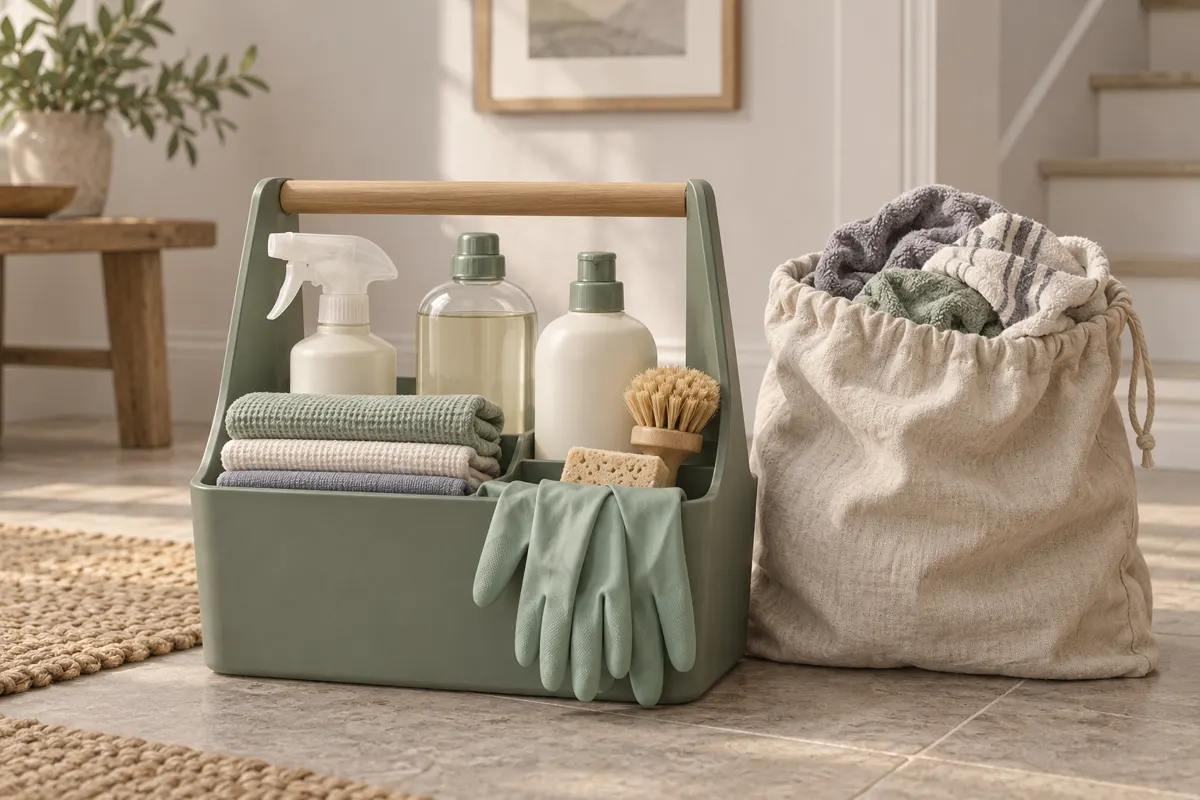
Use a small, sturdy container with a comfortable handle, pack only the supplies you use regularly, and give each item a consistent place. Keep cleaning products in their original labeled containers and leave spare bottles in storage. A useful caddy should be easy to lift, easy to set down, and easy to unpack without moving everything else.
Choose a container you can carry comfortably
Start with a bucket or handled tote you already own. Look for a stable base, accessible compartments, and surfaces you can wipe clean. A container with awkward corners or a handle that presses against your fingers may become frustrating once it holds bottles and tools. Size it around your everyday supplies, allowing enough space to grasp each item.
Our proposed fit check is simple: load the container, lift it, and carry it along your usual route between rooms. Include stairs if you normally use them. Check whether bottles stay upright and whether you can put the caddy down comfortably. If the load feels awkward, remove supplies before choosing a larger container.
Pack for your usual cleaning tasks
Gather your supplies in one place and identify what you reach for during routine cleaning. Keep occasional tools and replacement stock elsewhere. A mop, vacuum, and large duster can have their own storage spot; the caddy does not need to hold every cleaning item in the house.
Here is a proposed starter set. Adjust it to the surfaces in your home and the directions on your products:
- A few clean cloths for wiping and dusting.
- An everyday cleaner suitable for the surfaces you plan to clean.
- Glass cleaner, if it is part of your normal routine.
- A small scrub brush and a suitable sponge or scrubbing pad.
- Cleaning gloves, if required by the product directions.
- A small bag or separate container for collecting used cloths.
Add a specialist product only when you need it for a particular task. After several cleaning sessions, review what you actually used. Anything that repeatedly travels around untouched is a candidate for your main supply shelf.
Arrange bottles and tools so they are easy to reach
Keep products in their original labeled containers so their identity, directions, and precautions remain available. Avoid transferring them into matching decorative bottles just to make the caddy look coordinated. Close caps securely, keep bottles upright, and follow each label’s handling and storage instructions. Do not mix cleaning products.
- Place bottles in the deepest compartment, distributing their weight across the container.
- Put clean, dry cloths in a separate section away from bottle openings.
- Group small brushes and scrubbing pads where you can see and retrieve them.
- Keep the handle clear, then lift the caddy to check its balance.
If you must remove several items to reach one bottle, reduce the contents or rearrange them. Leave labels visible where possible, and return each item to the same position after use.
Keep clean and used cloths separate
Set up cloth groups before you start. Assign different colors to kitchen surfaces, bathroom surfaces, and general dusting, or use clearly separated stacks if your cloths are identical. The particular colors are your choice; using the same system consistently matters more.
Put used cloths straight into a separate collection bag or container instead of returning them to the clean stack. Keep toilet-cleaning tools separate from kitchen tools. At the end of the session, remove soiled cloths for laundering and clean reusable tools according to their care instructions. Repack them once they are dry.
Give the caddy a home and reset it after use
Choose one regular storage location so everyone who cleans knows where to find the caddy. A utility cupboard or laundry storage area may work, provided it meets the products’ storage directions. Keep cleaning products inaccessible to children and pets and separate from food. Easy access for the person cleaning should not override safe storage.
Our proposed reset routine is to remove used cloths, wipe any spills from the container, check bottle closures, and replace the clean tools you used. Keep spare products nearby in their own storage area rather than adding their weight to the caddy. This makes the next cleaning session easier to start and lets you see what needs replenishing.