Create a family drop zone that works in a small entryway
· Editorial team newswithlauraseattle.com
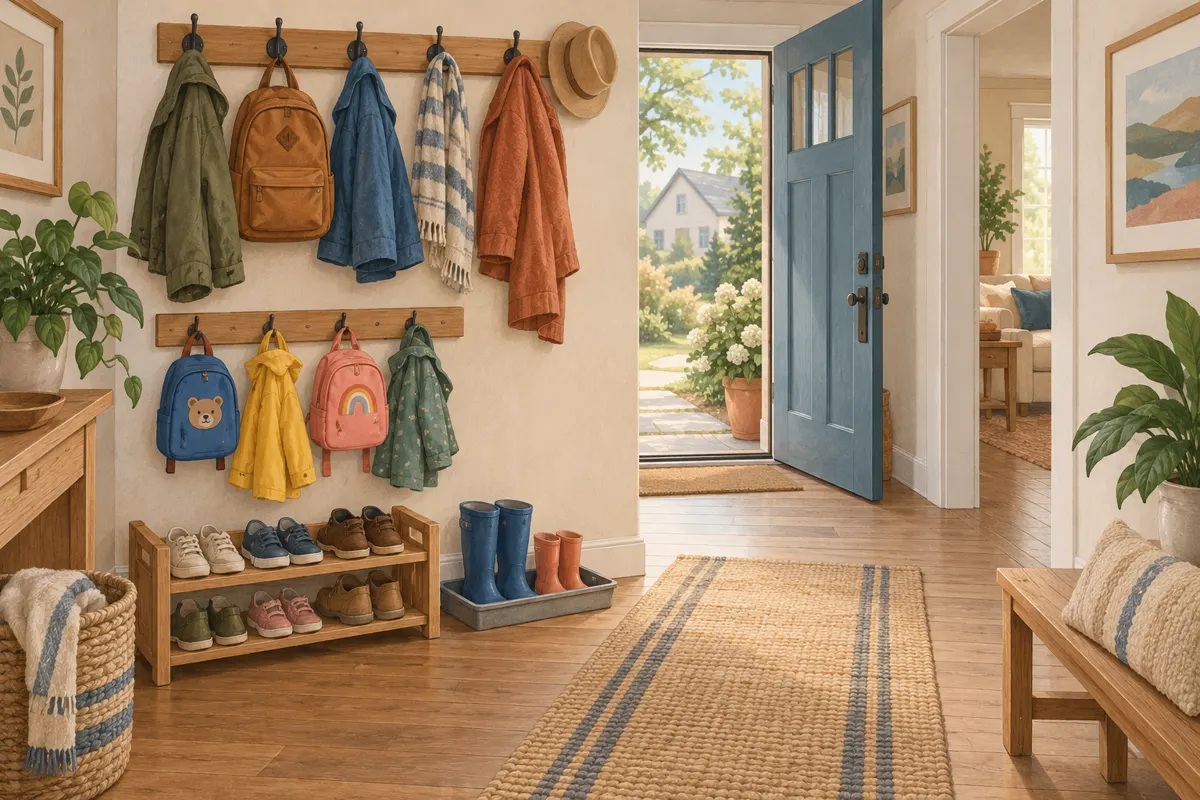
Organize a small family entryway by giving each person a reachable place for a bag, limiting shoes to the pairs in regular use, and separating wet rain gear from dry belongings. Keep the door and walking route clear. The proposed setup below starts with storage you already own and finishes with a five-minute evening reset.
Start with the space your family actually uses
Empty the immediate entrance, then walk through a normal arrival: open the door, step inside with a bag, take off a coat and remove shoes. Notice where you need room to turn or bend. Storage should fit around those movements, including the space occupied by hanging backpacks.
Our proposal is to reserve the entrance for items needed on the next ordinary outing. Spare footwear, occasional sports equipment and out-of-season coats can live elsewhere. If the front door opens into the living room, use one nearby wall or an existing cabinet as the drop zone instead of spreading belongings across the room.
- Check that the door opens fully with storage in place.
- Keep the route into the home clear of shoes, baskets and dangling straps.
- Choose a landing spot that everyone can reach without moving furniture.
Give each person a reachable bag spot
Wall hooks can hold coats and bags while leaving floor space available. Hooks at different heights allow children to reach their own backpacks. A shelf or wall organizer can provide a separate home for small essentials such as keys.
For this setup, propose one clearly assigned bag spot per person: an existing hook, a cubby or a basket beneath a console. Ask each household member to put away their usual bag to check reach and fit. A spot that requires adult help will need adjusting before it can support an independent routine.
Use names, colors or simple picture labels if ownership is unclear. Keep the assignment consistent. Put keys in an existing dish on a nearby surface, and give school papers one shallow tray that gets emptied during the evening reset.
Set a shoe limit that fits your storage
A bench with shoe storage combines a seat with a place for footwear. If you already have one, use its shelf or cubbies before adding another piece of furniture. An existing shoe rack may be enough when a bench would crowd the entrance.
Our suggested starting limit is one everyday pair per person, plus boots when needed. Adjust that limit to the available space. Assign each person a section of the rack or tray so that shoes have a destination beyond the floor beside the door.
When the assigned section is full, move a less-used pair to bedroom or closet storage before adding another. Keep pairs together and toes within the storage footprint. Avoid a deep shared bin if finding shoes means emptying it into the hallway.
Make room for wet coats and rain gear
Give wet belongings a temporary landing place separate from backpacks, papers and dry accessories. Our proposal is to use an existing washable tray for wet boots and a suitable hanging spot for damp outerwear. Leave room around coats instead of packing them tightly together.
- Place wet footwear on the tray without blocking the walking route.
- Let umbrellas dry in a suitable spot away from passing feet before returning them to storage.
- Keep dry hats and gloves in a reachable basket or drawer.
- Return dried gear to its assigned home and empty collected water from the tray.
If the entrance has no room for drying, choose another appropriate area in the home. The drop zone can handle arrivals without having to hold every damp item until it dries.
Build a five-minute evening reset
Try this proposed five-minute routine after dinner or before bedtime. Each person handles their own belongings, with help where needed. The aim is a clear entrance and ready-to-go essentials for the next morning.
- First minute: collect loose belongings and return items that belong in other rooms.
- Second minute: pair shoes, place them in assigned sections and remove extras.
- Third minute: hang bags and coats, checking that wet gear is still in its drying spot.
- Fourth minute: sort the paper tray and put anything needed tomorrow into the appropriate bag.
- Fifth minute: return keys, wipe up moisture and check that the door and walking route are clear.
If the same item keeps landing elsewhere, adjust its storage spot. Move a basket closer, lower a hook or reduce what the entrance holds. Make the everyday action easier before adding more storage.